Rodent Control in Bedford, TX
Bedford’s housing stock is older than most of the surrounding Mid-Cities towns, and older houses give rats and mice more ways in than a new build ever will.
Weep holes that were never fitted with vent covers, foundation gaps from decades of clay soil moving under the slab, mature trees dropping branches onto rooflines near Harwood Road and Brown Trail.
We handle rodent control for homes and businesses across Bedford and the surrounding DFW area, from the first inspection through the follow-up visit that confirms the problem actually left, not just went quiet for a few weeks.
If you’re hearing movement in the attic over a bedroom, finding droppings behind the pantry shelf, or you already put out a few store-bought traps and the activity came right back, we’d rather come look at the property than guess over the phone.
Contact Us for Quick Services
About Rodent Control DFW
Rodent Control DFW handles rodent work for Fort Worth and the towns around it, Bedford included. I spent ten years doing this work for other companies before starting this one, and my co-founder, Noah Willson, brings more than 13 years in the field and over 140 rodent jobs he’s personally worked start to finish.
Between the two of us, that’s the whole operation. No layer of subcontractors between the person who inspects your attic and the person whose name is on the invoice.
Why Bedford Homeowners Choose Us
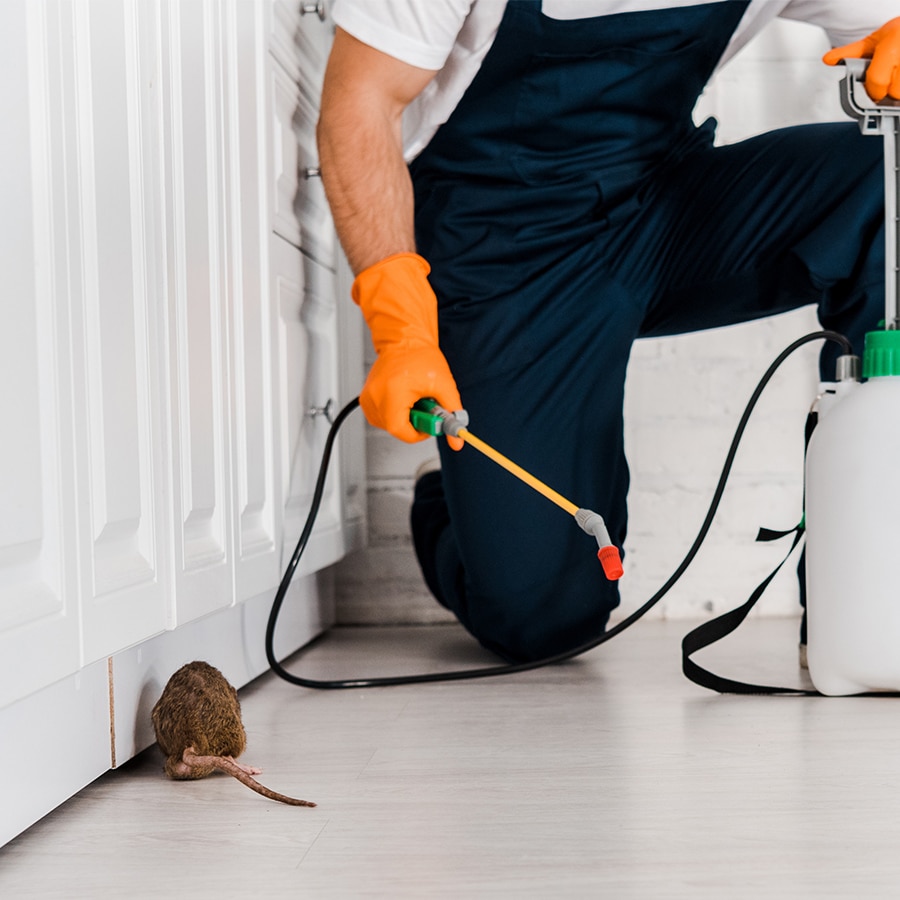
Most of the calls we get from Bedford start the same way. A homeowner hired somebody, a technician dropped a few snap traps, and the scratching in the attic was back within a month. That’s rarely the homeowner’s fault. Trapping without finding and closing the entry point treats what’s already inside the house, not the reason it got in, and plenty of companies stop there because it’s faster to bill.
We don’t work that way in Bedford or anywhere else we go. Every job starts with a full walk of the property, attic to foundation, and ends with us physically closing whatever let the rodents in to begin with. That’s slower than a trap-and-go visit. It’s also the only version of the job that still holds up six months later, which is the only measure that actually matters to a homeowner.
What Rodent Control in Bedford Actually Involves
A rodent job here runs through four steps done in order: a full inspection of the attic, foundation line, and exterior penetrations to map every entry point and sign of activity, exclusion work sealing those points with chew-proof material, trap placement in the areas where activity was actually found, and a follow-up visit to confirm the population is gone and the sealed points are holding before the job is called finished.
That sequence matters more than any single step in it. Skip the inspection and you’re guessing at where the traps should go. Seal before you’re sure the population is cleared and you can trap the problem inside the wall instead of removing it.
Why Bedford's Older Neighborhoods See More Rodent Activity
Most of Bedford’s housing was built in the 1970s and 1980s, which means a lot of the original weep holes, foundation vents, and utility penetrations are decades past whatever screening they had when the house was new. Add in the mature landscaping that gives Bedford its established feel, the kind of tree cover you find around Woodfield and Bedford Heights, and you’ve got branches overhanging rooflines that give roof rats a direct route to the attic without ever touching the ground.
The clay soil under most of Bedford doesn’t help. It swells when it’s wet and shrinks when it’s dry, and that constant movement opens hairline gaps around slab foundations that a house built on more stable ground wouldn’t develop nearly as fast. None of this is unique to any one street, it’s closer to a pattern across the older Mid-Cities towns generally, Bedford just has more of that older stock than some of its newer neighbors.
Signs You're Dealing With Mice, Not Rats
House mice leave small, thin droppings, usually scattered rather than piled, and gnaw marks fine enough that they show up on food packaging and cardboard corners more than structural wood. If what you’re hearing is quick, light scurrying at night, mostly in a kitchen or pantry wall, that points to mice.
Rats sound and look different. Norway rats stay low, burrowing near foundations and cluttered ground-level storage, while roof rats climb fence lines and trees to reach attics and soffits, which is common in Bedford’s older, more heavily landscaped streets. Heavier droppings, thicker gnaw marks on structural wood, and movement that sounds slower and heavier than mice all point toward rats instead. Getting this right before the first visit changes where we focus the inspection.
What a Full Inspection Covers Son a Bedford Property
A rodent complaint almost never stays confined to the room someone called about. A homeowner reports noise in a bedroom wall and the actual entry point turns out to be a gap around a dryer vent on the opposite side of the house, which is exactly why we don’t stop at the room with the complaint.
Every inspection covers the attic, the crawl space or foundation perimeter, and every utility line penetration where pipes, wires, or vents pass through an exterior wall. On an older Bedford home that usually means checking weep holes along brick veneer, HVAC line penetrations, the seal under a worn garage door, and foundation vents with screens that have degraded or gone missing entirely.
We walk the whole exterior first, then the attic and any accessible crawl space, marking every opening a rodent could realistically use rather than just the obvious ones.
What Actually Stops Rodents From Coming Back
Rodent control only holds long-term when trapping gets paired with exclusion, physically sealing every gap, vent, and utility opening a rodent could use to get back in.
Traps alone remove what’s already inside a structure. Sealing is what keeps the next generation from ever getting a foothold, and it’s the step a lot of companies skip because it takes real time on a ladder or in a crawl space compared to setting a few traps and leaving.
For mouse-sized gaps, the material that actually holds is 19-gauge galvanized hardware cloth with a quarter-inch mesh, small enough that a juvenile mouse can’t squeeze through and heavy enough that it can’t chew through either.
Spray foam alone doesn’t hold up on its own, a mouse’s front teeth grow continuously and chewing through soft sealant is barely an inconvenience to them, so foam gets paired with a hardware cloth backing or sheet metal on anything larger than a hairline crack instead of used as a standalone fix.
Rodents We Handle Around Bedford
Three rodents account for most of the calls we get in and around Bedford: Norway rats, roof rats, and house mice. Norway rats stay low, burrowing near foundations and slab edges, so their work is mostly ground-level, checking crawl spaces and anywhere soil meets the structure.
Roof rats climb, using the mature trees common in Bedford’s older neighborhoods to reach attics and soffits without touching ground at all. House mice are the smallest of the three and by far the most common call.
A female house mouse can start breeding again within about 48 hours of giving birth and can have five or six pups in a litter, which is why a population that looked small in October can be a real problem by December if the entry point isn’t found and closed early.
Knowing which one you’re dealing with before the first visit changes where the technician focuses and how aggressive the exclusion work needs to be.
Why We Include a Follow-Up Visit
A single treatment tells you rodents were there. It doesn’t tell you the exclusion work held or that every rodent already inside the structure is actually gone, especially with a species that breeds as fast as house mice do. So a follow-up visit is part of the job, not something we mention as an add-on after the fact.
We come back to check the traps, look for new activity, and confirm the sealed points are still sealed. One job that stuck with me was a mouse colony in an older Dallas home, more than 20 breeding females already producing new litters faster than a single treatment could catch up with.
It took about three months of steady trap checks before I was confident the population was actually gone, and only then did we go through and seal the house.
Sealing too early on a colony that size just traps the problem inside the walls instead of clearing it, which is the same order we follow on every job, Bedford included.
Licensed and Compliant
We’re fully insured and compliant with Texas Department of Agriculture structural pest control regulations. All rodent control services performed on Bedford properties follow state licensing requirements from start to finish, so treatment stays safe, legal, and effective for a home or business.
What Happens After You Call
The first step is a conversation about what you’re hearing or seeing, so we have some idea what to expect before anyone shows up. From there we schedule a full property inspection rather than arriving and setting traps blind, and that inspection is what the treatment plan actually gets built around.
Once we know what we’re dealing with, whether it’s a handful of mice behind a kitchen wall or something closer to the Dallas case above, we set traps and start exclusion work on the entry points we found.
Depending on the size of the problem, that might wrap up in a couple of weeks or take a few visits over a couple of months, and a follow-up visit to confirm the work held is always part of it, not billed separately later.
What We Won't Promise
We won’t tell a Bedford homeowner that a large colony is solved in one visit, because it usually isn’t, and a company that promises that is either overselling or planning to skip a step. We also won’t seal every entry point on day one if we suspect there’s still an active population inside, since that traps the problem in the walls instead of clearing it.
We handle rodents specifically. If a Bedford property has a broader pest issue outside that scope, we’ll say so plainly rather than stretch a rodent visit to cover something else.
Track Record
Between us, we bring more than 13 years of hands-on field experience and over 140 individually completed rodent jobs to every property we walk into, in Bedford and across the surrounding DFW area. About 95 percent of our customers tell us they’re happy with the results. We’d rather earn that number on repeat business and word of mouth than chase it with discount coupons.
Neighborhoods and Areas We Serve Near Bedford
We work throughout Bedford, including the older established areas around Woodfield, Bedford Heights, and Brook Hollow, and we also cover the surrounding Mid-Cities towns of Euless, Hurst, Colleyville, and North Richland Hills.
The pattern is consistent across all of them, older housing stock and mature landscaping generally mean more entry points to check than a newer subdivision would have, and we plan the inspection around that rather than treating every house the same.
Frequently Asked Questions
Do you only set traps in Bedford, or do you also seal entry points?
Both, on every job. Trapping without sealing is why a lot of Bedford customers call us after trying someone else first.
How long does a rodent job in Bedford usually take?
Depends on the size of the problem. A small mouse issue might wrap up in a few weeks. A larger colony can take a few months of checking before it’s safe to seal everything shut.
Are your treatment methods safe for pets and kids?
We factor that into trap placement and any treatment used, and we’ll walk through the specifics for your Bedford property before starting anything.
Do you guarantee rodents won't come back?
Not with no conditions attached, since a neighboring property or a new gap from foundation settling can always reintroduce rodents later. What we guarantee is a follow-up visit to confirm the original job held, and an honest answer if something outside our control changes.
Do you cover areas outside Bedford proper?
Yes, across the surrounding DFW Metroplex. If you’re not sure your specific street is covered, the fastest way to find out is to call and ask.
Get in Inspection
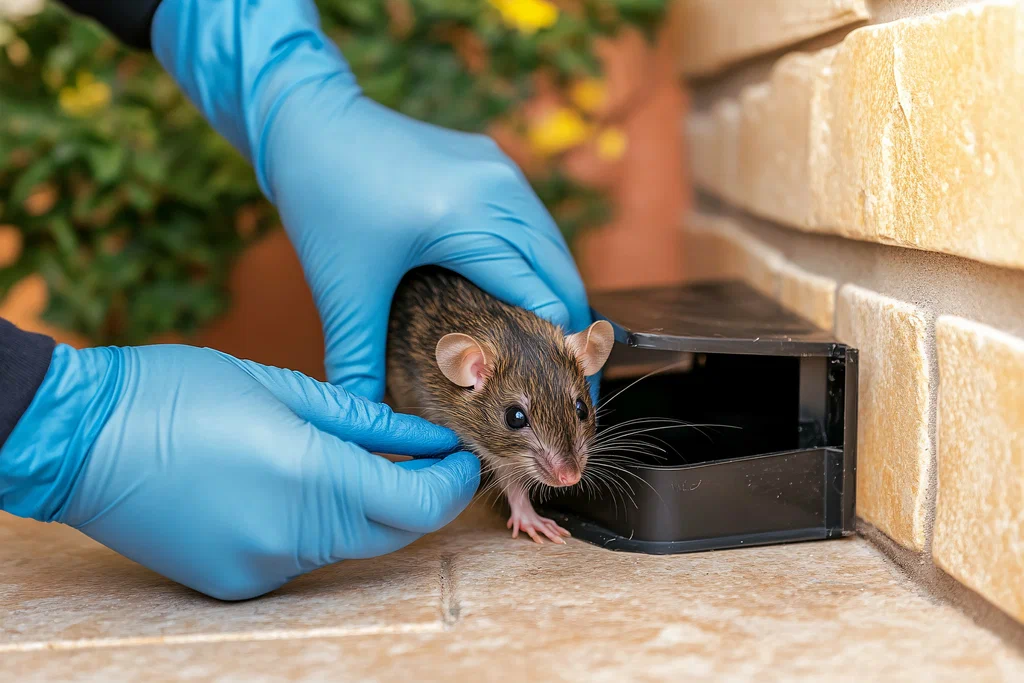
If you’re hearing movement in a Bedford attic, finding droppings somewhere they shouldn’t be, or a trap-and-hope approach from someone else didn’t hold, we’re happy to come take an honest look. Call to schedule a full property inspection for your Bedford home or business.
Contact Rodent Control DFW
Have questions or need help with our services? Get in touch with our team today. We’re here to answer your questions, provide expert guidance, and help you find the right solution for your needs
- hello@rodentcontroldfw.com
- Rushing River Dr Fort Worth, TX 76118 United States