
Rodent Control for Fort Worth and the Surrounding DFW Area
Rats and mice don’t leave a house since someone set a few traps. They leave when the gap they used to get in is gone. We handle rodent control across Fort Worth and the wider DFW area on that logic: full property inspection first, trapping and exclusion work second, a follow-up visit to confirm the job actually held, not just went quiet for a few weeks. If you’re hearing movement in the attic at night, finding droppings behind the pantry shelf, or you already tried a box of snap traps that didn’t fix anything, the next right move is a real inspection, not another trap.
How This Company Got Started
This company started in 2025, but the work behind it goes back further than that. I spent ten years doing rodent work for other companies before deciding it was time to run things the way I actually thought they should be run.
Somewhere along the way I crossed paths with Noah Willson, who’d already put in 13 years in the field and personally handled more than 140 rodent jobs on his own, start to finish. We kept ending up on the same kind of calls, hearing the same complaints from homeowners about companies that set a few traps and disappeared.
Rodent Control DFW is what came out of that. Noah brings a level of hands-on field experience that’s hard to find, the kind you only build by doing the work yourself, job after job, for well over a decade.
I bring my own ten years in the industry and a stubborn opinion that trapping without sealing entry points is half a job dressed up as a finished one. Between the two of us, that’s the whole business, no layers of subcontractors in between.
Why Fort Worth and DFW Homeowners Choose Us
Most of the calls we get start the same way. Someone hired a company, a technician set a few traps, and the noise in the attic came right back a month later. That’s usually not the homeowner’s fault. Trapping without finding and closing the entry points treats what’s already inside the house, not the reason it got in, and a lot of companies stop there because it’s faster and cheaper for them to do so.
We don’t work that way. Every job starts with a full look at the property, not just the room where the complaint came from, and ends with us physically closing whatever let the rodents in to begin with. That’s slower than a quick trap-and-go visit. It’s also the only version of this job that actually holds up six months later.
Noah’s 140-plus jobs and my own decade in the field mean we’ve seen most of the ways a Fort Worth or DFW home lets rodents in, from weep holes that were never screened to attic vents with the mesh chewed through years ago. That pattern recognition is most of what a homeowner is actually paying for.
Services We Provide
We work on two animals, mice and rats, because trying to be a general pest control company waters down what either of us has actually built expertise in over the years. Every job falls into a handful of categories below, and every one of them starts from the same full inspection, not a service picked off a menu over the phone.
Mouse Control
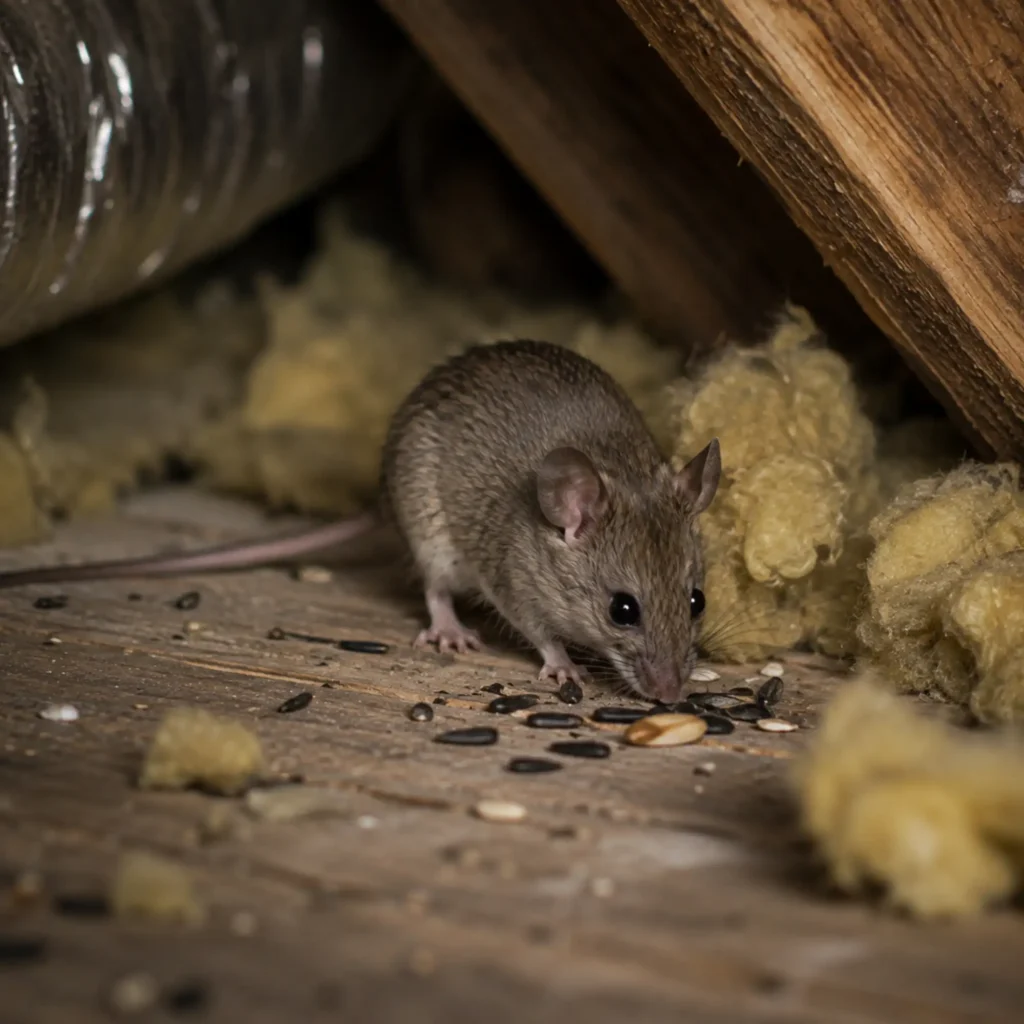
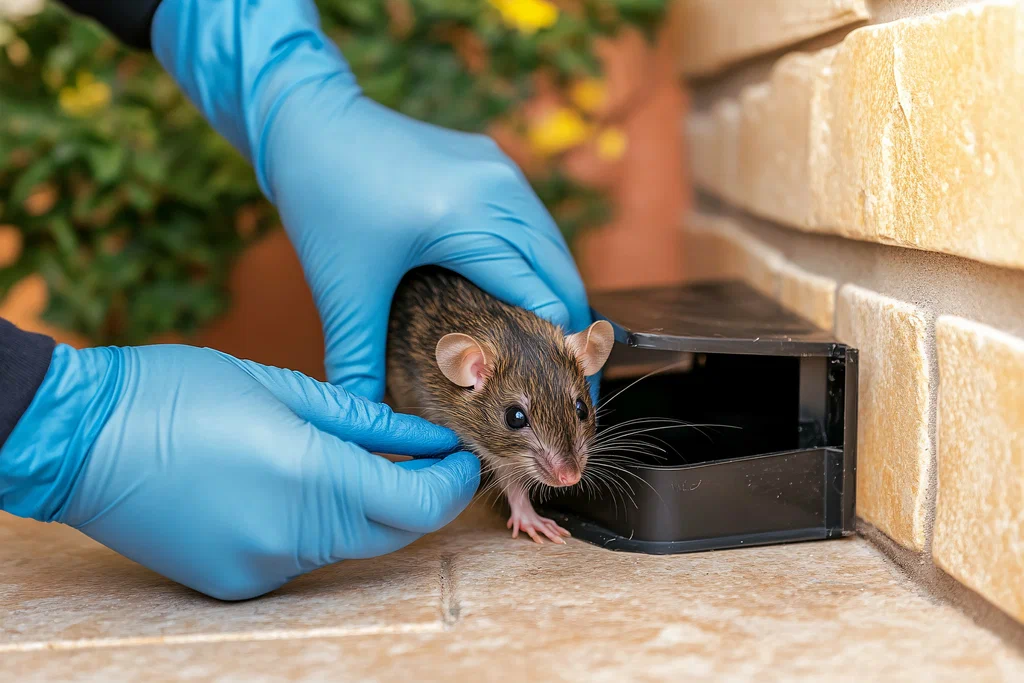
House mice are the call we get most often, and they're also the one where speed of action matters more than raw force. A female house mouse can start breeding again within about 48 hours of giving birth, carries a litter for roughly 19 to 21 days, and can have five or six pups at a time. Do that math over a few months in a house with easy food and shelter and it's obvious why a single treatment rarely finishes the job, and why the population can look worse before it looks better. In living spaces we rely on snap traps, checked and reset on a schedule rather than left to sit.
Rat Control (Norway Rats and Roof Rats)
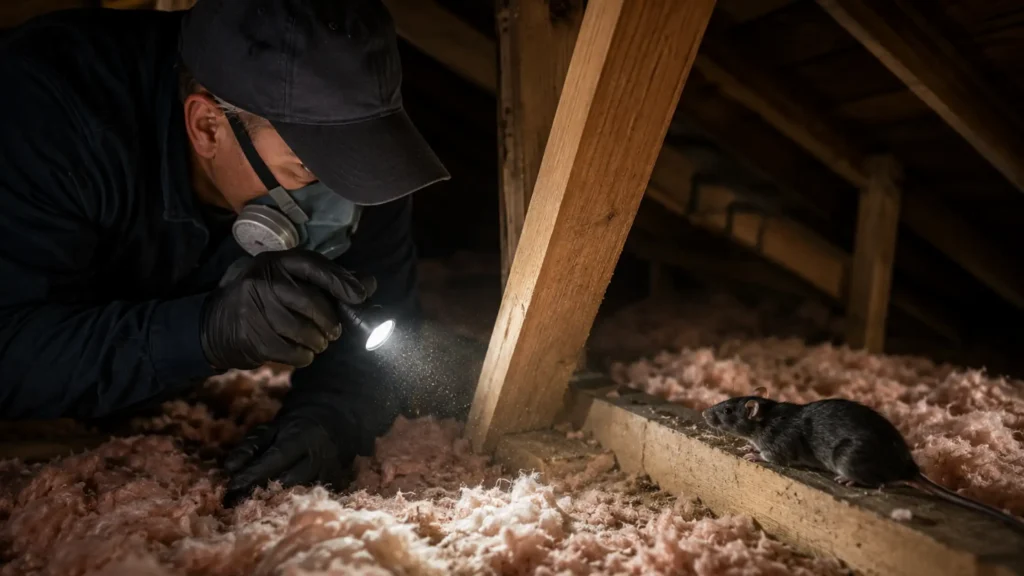
Rats split into two different jobs depending on which species you've got. Norway rats stay low, burrowing near foundations and slab edges, so that work is mostly ground-level: checking crawl spaces, foundation gaps, and anywhere soil meets the structure. Roof rats climb, using fence lines and overhanging trees to reach attics and soffits, so that job is mostly overhead: attic entry points, roofline gaps, and vent screens. Treating a roof rat problem like a ground-level Norway rat problem, or the other way around, is one of the more common mistakes we see from a prior company's visit before someone calls us.
Exclusion & Entry-Point Sealing
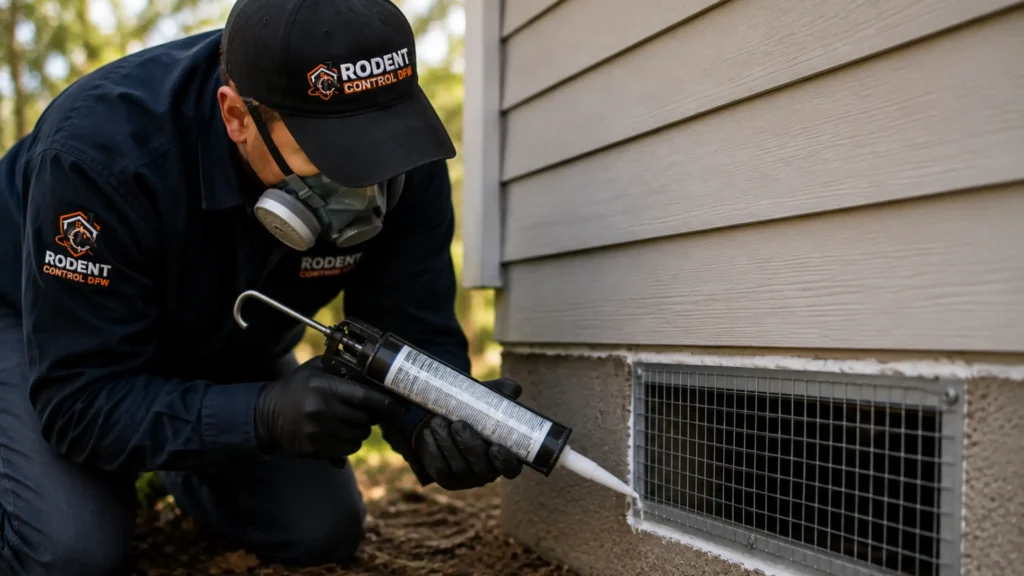
This is the part of the job that actually stops the problem instead of just thinning it out. For mouse-sized gaps, the material that holds is 19-gauge galvanized hardware cloth with a 1/4-inch mesh, small enough that a juvenile mouse can't squeeze through and heavy enough that it can't chew through it either. Openings only large enough for rats can sometimes get away with a 1/2-inch mesh, but on a mixed job we'd rather size everything to the 1/4-inch standard than seal a gap that only stops the bigger animal. Spray foam alone doesn't hold up here, rodents can and do chew straight through it.
Attic and Crawl Space Inspection
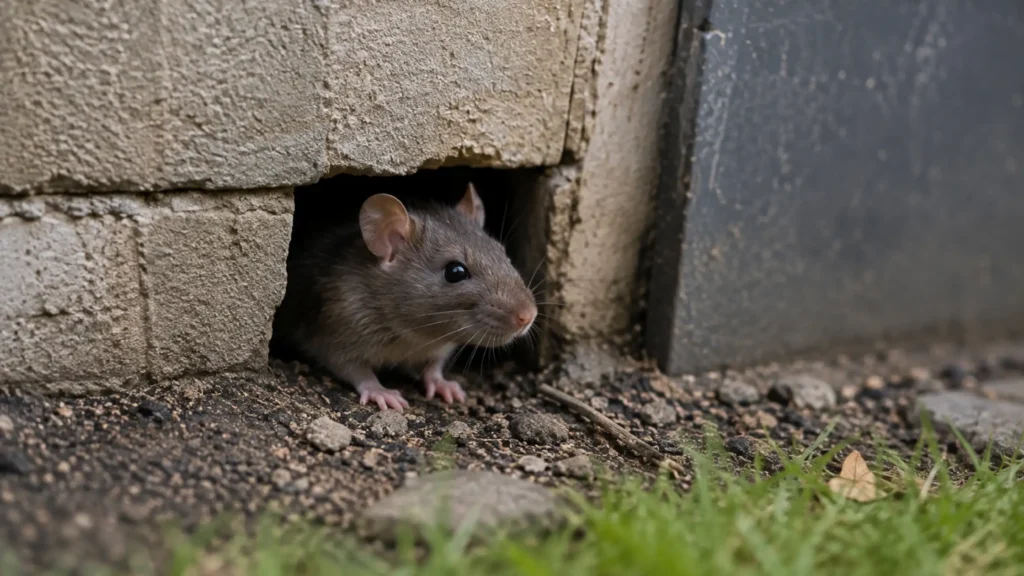
A lot of what lets rodents into Fort Worth and DFW homes comes down to the region itself as much as the house. This area sits on expansive clay soil that swells and shrinks with the weather, which is a big part of why slab foundations here develop hairline cracks and gaps over time that a house built on more stable ground wouldn't get. Add in brick veneer construction, which relies on weep holes at the base of the wall for drainage and ventilation, and you've got two entry paths that are built into how houses here are made, not just wear and tear.
Follow-Up Verification Visits
Quiet" and "cleared" aren't the same thing, so the follow-up visit is where we check traps, look for new activity, and confirm sealed points are holding, not just assume it worked because the noise stopped. Fresh droppings are dark and moist, old ones dry out and turn grey, and trap activity that drops off over two or three checks in a row tells us more than one clean visit on its own. A small mouse job might need one follow-up a week or two out; a bigger colony, like the Dallas case above, meant weekly checks over three months before we trusted it enough to seal the last entry points. This visit is included in the job, not billed separately.
Residential & Commercial Rodent Control
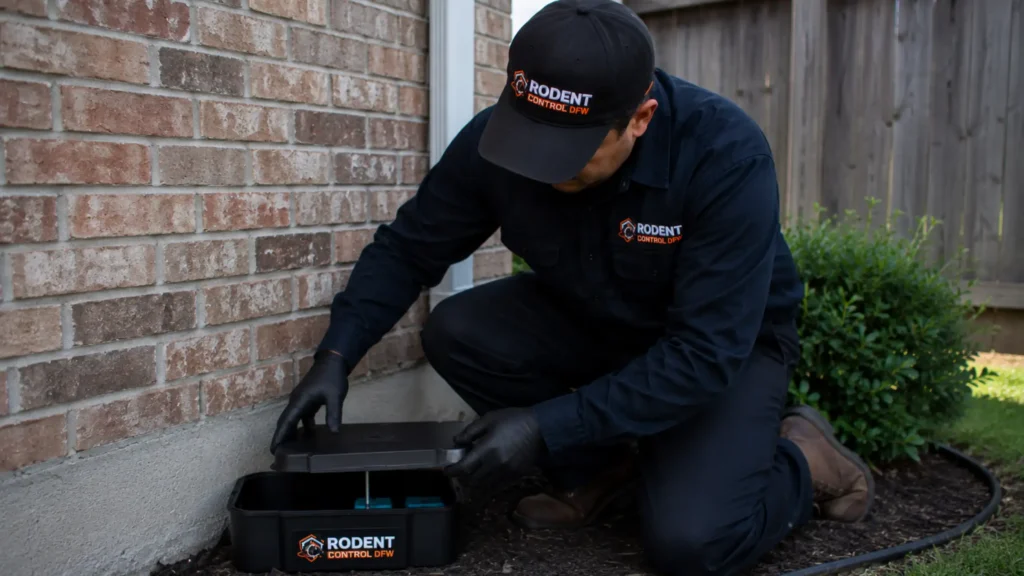
We take on both house calls and commercial properties across Fort Worth and DFW, and the inspection and exclusion approach stays the same; what changes is where bait can go. Inside a food-handling area, control has to be mechanical, snap traps or glue boards in non-product spaces, not bait stations near anything that touches food; outside, tamper-resistant bait stations go in at regular intervals with extra attention at dock doors and dumpster areas, each one tracked and logged since a business that gets audited needs that record. A house doesn't carry that documentation load.
What Actually Stops Rodents From Coming Back
Rodent control only holds long-term when trapping is paired with exclusion, physically sealing every gap, vent, and utility line opening a rodent could use to get back in. Traps alone remove what’s already inside a structure. Sealing the entry points is what keeps the next generation of rodents from ever getting a foothold in the first place, which is the step most companies skip.
This isn’t a secret method. It’s closer to industry best practice that a lot of DFW pest companies just don’t bother doing consistently, because trapping is quicker to bill and exclusion work takes real time on a ladder or in a crawl space. We’d rather spend that time than come back to the same house in eight weeks.
What a Full Inspection Actually Covers
A rodent complaint almost never stays where it started. A homeowner calls about noise in one bedroom wall, and the actual entry point turns out to be a gap around a dryer vent on the opposite side of the house. That’s why we don’t just check the room someone called about.
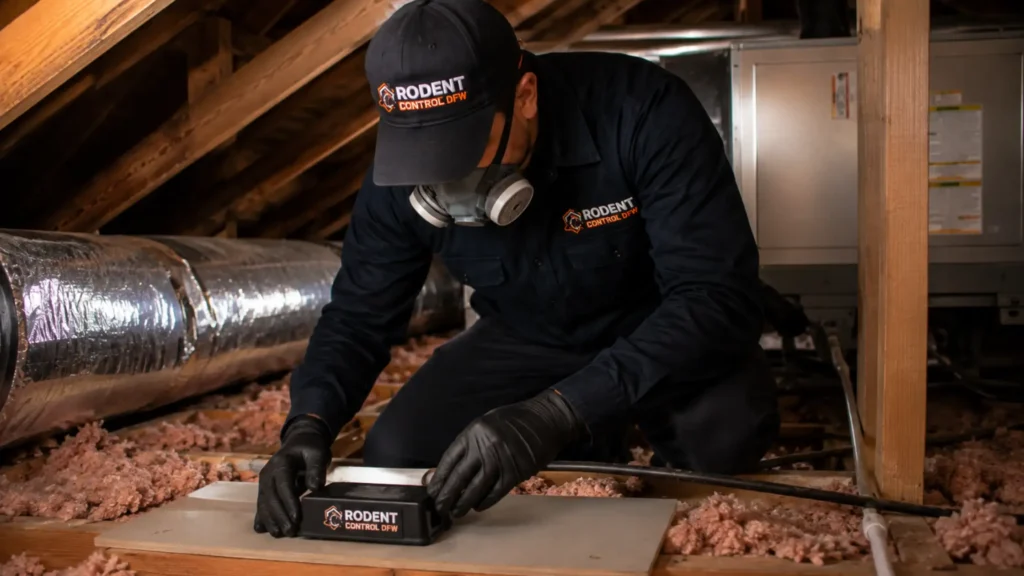
Every inspection covers the attic, the crawl space or foundation, and every utility line penetration where pipes, wires, or vents pass through an exterior wall. Older Fort Worth and DFW homes especially tend to have gaps around these points that were never sealed properly during construction or that opened up as the house settled over the years.
We walk the whole exterior, then go through the attic and any accessible crawl space, and mark every opening a rodent could realistically use, not just the obvious ones.
Why We Include a Follow-Up Visit
A single treatment tells you rodents were there. It doesn’t tell you the exclusion work held or that every rodent already inside the structure is gone, especially with a species that breeds as fast as house mice do. So a follow-up visit is part of the job, not an upsell we mention after the fact.
We come back to check the traps, look for any new activity, and confirm the sealed points are still sealed. If something’s still moving, we deal with it then. If it’s clear, that’s when we consider the job actually finished, not on the day we first set traps.
Rodents We Handle Across Fort Worth and DFW
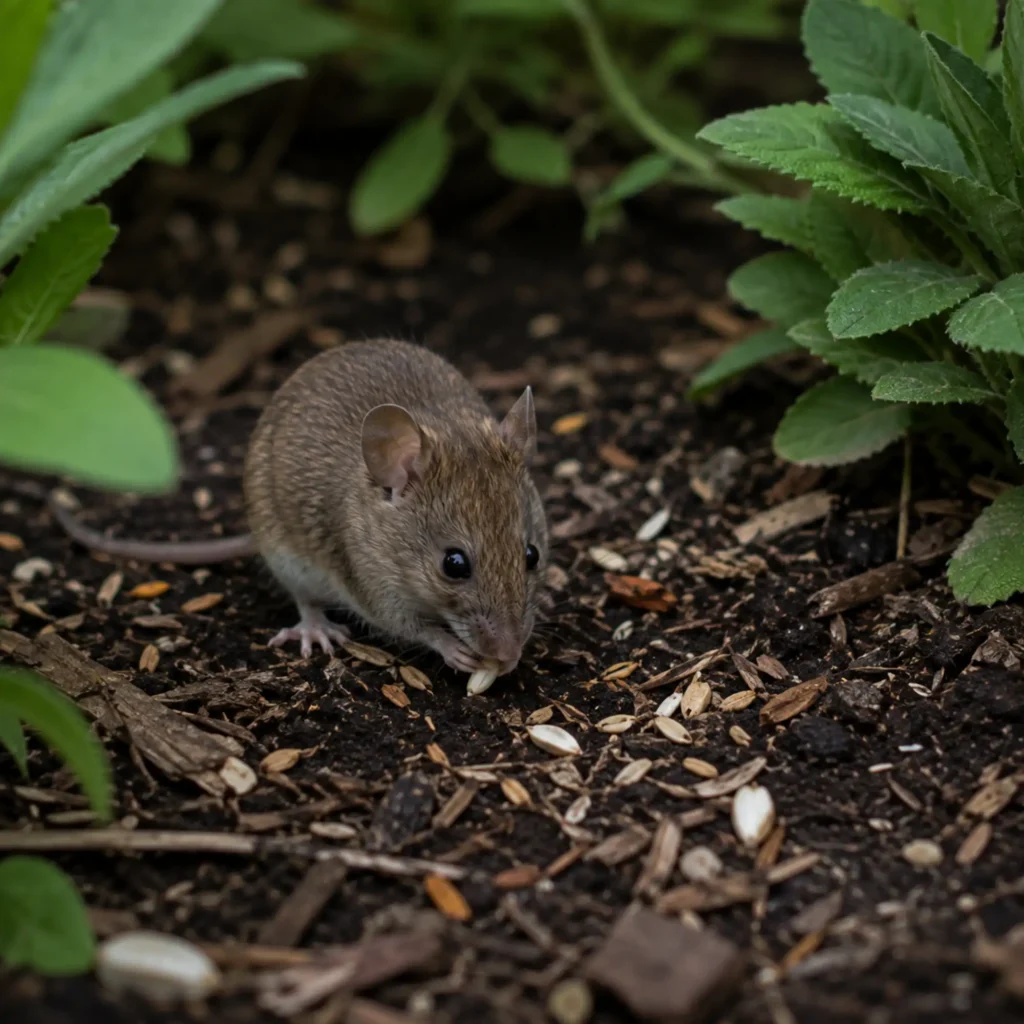
The DFW area sees three rodents most often in and around homes: Norway rats, roof rats, and house mice. Norway rats stay low, burrowing near foundations, crawl spaces, and cluttered ground-level storage. Roof rats go the other direction, climbing fence lines and trees to get into attics, soffits, and rooflines, which is part of why older neighborhoods with mature trees see them so often. House mice are the smallest of the three and the most common by far, squeezing through gaps you’d barely notice and nesting behind appliances, in wall voids, or inside stored boxes.
Knowing which one you’re dealing with changes the approach. Norway rats need ground-level exclusion work around the slab and foundation. Roof rats need the attic and roofline checked as carefully as anything at ground level. House mice, because they breed so quickly, are usually the ones where a slow, staged approach matters more than a single aggressive treatment.
A Job That Took Three Months, Not Three Days
One job that stuck with me was an older house in Dallas with a mouse problem that had clearly been building for a while. When the owner called, I went out and did a full inspection first, the way we always do, before setting a single trap. What we found wasn’t a handful of mice.
It was a colony, more than 20 breeding females, already producing new litters faster than a one-time treatment could ever catch up with. We set traps and I went back week by week to check and reset them, watching the numbers drop but staying patient instead of declaring it done too early.
It took about three months of that steady, unglamorous checking before I was actually confident the population was gone, not just quiet. Only then did we go through the house, especially the basement, and seal every opening we could find. That order matters. Sealing too early on a colony that size just traps the problem inside the walls instead of solving it.
Licensed and Compliant
We're fully insured and compliant with Texas Department of Agriculture structural pest control regulations. All rodent control services are performed in line with state licensing requirements, so treatment stays safe, effective, and legal for your home or business.
Where We Work
We serve Fort Worth and the surrounding DFW area. Older neighborhoods with aging construction and newer subdivisions both bring rodents in, just through different paths, gaps around original weep holes and settled foundations on one end, unsealed utility penetrations on new builds on the other.
What Happens After You Call
The first step is always a conversation about what you’re hearing or seeing, so we have some idea what to expect before we get there. From there, we schedule a full property inspection rather than showing up and setting traps blind. That inspection is what the treatment plan gets built around, not a generic package applied to every house the same way.
Once we know what we’re dealing with, whether it’s a handful of mice or something closer to the Dallas case above, we set traps and start exclusion work on the entry points we found. Depending on the size of the problem, that might be a short process or it might take a few visits over a couple of months. Either way, a follow-up visit to confirm the work held is always part of it, not something billed separately later.
What We Won't Promise
We won’t tell you a large colony is solved in one visit, because it usually isn’t, and a company that promises that is either overselling or planning to skip steps.
We also won’t seal every entry point on day one if we suspect there’s still an active population inside, since that traps the problem in the walls instead of clearing it, the same mistake we avoided on the Dallas job.
We handle rodents specifically. If a property has a broader pest issue outside that scope, we’ll say so plainly rather than stretch a rodent visit to cover something else.
Frequently Asked Questions
Do you only set traps, or do you also seal entry points?
Both, on every job. Trapping without sealing is why a lot of customers call us after trying someone else first.
How long does a rodent job usually take?
It depends on the size of the problem. A small mouse issue might wrap up in a few weeks. A larger colony, like the Dallas case above, can take a few months of checking before it’s safe to seal everything up.
Are your treatment methods safe for pets and kids?
We take that into account when planning trap placement and any treatment used, and we’ll walk through the specifics for your property before starting.
Do you guarantee the rodents won't come back?
We don’t promise a guarantee with no conditions, since a neighboring property or a new gap from settling can always reintroduce rodents later. What we do guarantee is a follow-up visit to confirm the original job held, and honest advice if something outside our control changes.
Do you service areas outside Fort Worth?
Yes, we work across the surrounding DFW area. If you’re not sure whether your location is covered, the fastest way to find out is to call and ask.
Get an Inspection
If you’re dealing with noise in the attic, droppings somewhere they shouldn’t be, or a trap-and-hope approach from someone else that didn’t hold, we’re happy to come take an honest look. Call to schedule a full property inspection for your Fort Worth or DFW home or business.
Contact Rodent Control DFW
Have questions or need help with our services? Get in touch with our team today. We’re here to answer your questions, provide expert guidance, and help you find the right solution for your needs
- hello@rodentcontroldfw.com
- Rushing River Dr Fort Worth, TX 76118 United States