Mouse Control in Fort Worth
A mouse can flatten the cartilage around its skull and squeeze through a gap about the width of a pencil. That single fact is why most mouse problems in Fort Worth homes never actually go away with store-bought traps or a single spray treatment. If mice are already inside, or you’re finding droppings, chewed packaging, or hearing scratching in the walls at night, We handles mouse-specific inspection, exclusion, and trapping for homes and businesses across Fort Worth.
About US
Rodent Control DFW is a Fort Worth-based rodent service that dispatches licensed, vetted technicians for every job, not a national call center reading from a script. Every technician who takes a mouse job here is held to Texas Department of Agriculture licensing standards and insured before they’re allowed on a property. Full detail on how this operation is run and who’s behind it is on the About page.
Why Choose Us
Most companies treat mice the same way they treat ants: spray something and move on. That approach doesn’t work on an animal that can chew through drywall, reproduce every three weeks, and re-enter through a gap you’d assume was too small to matter.
The difference here is that mouse jobs get treated as an exclusion problem first and a trapping problem second, which is the order that actually stops activity instead of just reducing it for a few weeks. Response on a mouse call comes within 24 to 48 hours, and the technician inspects before recommending anything. Nobody gets a bait station dropped off with a sales pitch attached.
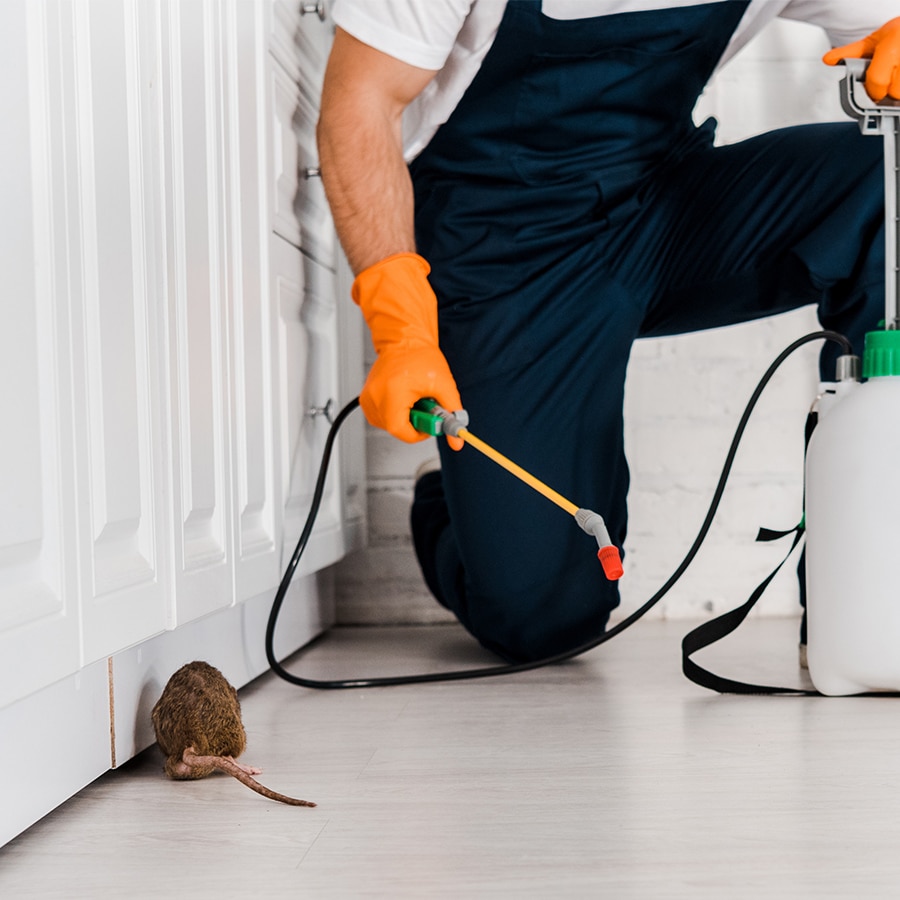
Signs It's Mice, Not Rats, in Your Fort Worth Home
Fort Worth homes deal with four common rodent species, and the treatment approach genuinely changes depending on which one you have. House mice and deer mice leave small, thin droppings about the size of a grain of rice, usually scattered rather than piled in one spot.
Their gnaw marks are finer than a rat’s, often showing up on food packaging, cardboard, or the corners of stored boxes rather than on structural wood. If you’re hearing quick, light scurrying mostly at night, especially in a kitchen, pantry, or attic, that pattern points to mice rather than the heavier, slower movement typical of Norway or roof rats.
The distinction matters because mice need far smaller openings to get in and reproduce faster, which changes how aggressive the exclusion work needs to be and how soon a follow-up visit should happen.
How Mice Actually Get In
The single biggest failure point in most mouse jobs, including ones done by other companies, is treating the interior and ignoring the entry point. A mouse doesn’t need a hole. It needs a gap, and a quarter-inch gap is enough for an adult mouse to get through.
In Fort Worth specifically, the recurring entry points are weep holes along brick veneer that were never fitted with vent covers, gaps around HVAC line sets where they penetrate the exterior wall, the space under garage door seals once they’ve worn down, and foundation vents on older homes with damaged or missing screens.
A thorough inspection checks all of these before any trap gets set, because setting traps without sealing entry points just means catching a portion of an ongoing population instead of stopping it.
Why Foam and Caulk Don't Work Against Mice
can chew through both. A mouse’s front teeth grow continuously, so gnawing through a soft sealant isn’t a deterrent, it’s barely an inconvenience. Effective exclusion material has to be something a mouse physically can’t chew through,
which is why steel wool packed into a gap, copper mesh, or galvanized hardware cloth get used instead. Foam still has a place, but only as a filler behind one of those materials, never as the barrier itself.
This is one of the more common corrections a technician makes on a first visit: a homeowner has already tried to seal a gap themselves, and the mice reopened it within days.
What a Mouse Control Job Actually Involves
A mouse control visit in Fort Worth typically runs through four steps: a full interior and exterior inspection to map entry points and activity, exclusion work to physically seal those points with chew-proof material, trap placement in active areas rather than randomly around the home, and a monitoring period to confirm activity has actually stopped before the job is closed out.
- Inspection of the attic, foundation line, exterior penetrations, and any interior signs of activity, to identify where mice are getting in and how far the problem has spread.
- Exclusion work sealing every identified entry point with steel wool, copper mesh, or hardware cloth, not foam or caulk alone.
- Trap placement based on where droppings, gnaw marks, and travel paths were actually found, rather than a standard number of traps spread evenly through the house.
- A follow-up check to confirm no new activity, since sealing the wrong gap or missing a secondary entry point is the most common reason mice reappear after treatment.
Why DIY Traps and Bait Alone Usually Fail
Snap traps and bait stations aren’t wrong tools, they’re incomplete ones. A homeowner who sets traps without addressing entry points is working against a mouse population that keeps getting reinforced from outside.
Bait alone carries its own problem: a mouse that dies from bait inside a wall cavity creates an odor issue that can last for days and is far harder to deal with than the original sighting.
That’s part of why exclusion has to come first. Removing the mice already inside only solves half the problem if more can still get in behind them.
Health and Property Risks Specific to Mice
Mice carry hantavirus and salmonella risk primarily through droppings and urine, which is a real concern in enclosed spaces like attics and pantries where ventilation is limited.
Beyond the health side, mice chew on wiring insulation, which is a documented cause of electrical shorts and, in some cases, house fires.
They’ll also nest in insulation, which reduces its effectiveness and usually means replacement once an infestation has been active for a while. None of this requires panic, but it’s the reason a mouse sighting is worth acting on rather than waiting to see if it resolves on its own.
Why Mouse Activity Spikes in Fort Worth Every Fall
Mice don’t hibernate, and once outside temperatures start dropping in October and November, they look for a warmer, food-accessible space, which is almost always a house rather than a shed or garage.
This is why mouse calls in Fort Worth pick up noticeably heading into the cooler months, even in homes that had no rodent activity all summer. A single mouse getting in during this window doesn’t stay a single mouse for long.
A female house mouse can produce a litter of five to six pups roughly every three weeks, and those pups are capable of reproducing within about six weeks themselves. What looks like a minor issue in October can be a real infestation by December if the entry point isn’t found and closed.
Frequently Asked Questions
How fast can someone come out for a mouse problem?
Within 24 to 48 hours of a request coming in.
Will one visit fully solve a mouse problem?
Usually not in a single visit. Exclusion and trapping need a follow-up check to confirm the sealed points are holding and no activity remains, especially if the infestation had already been going on for a while before the first visit.
Do you use poison as the main method?
No. Poison-only approaches carry a real risk of dead mice decomposing inside walls, which creates a worse problem than the original one. Exclusion and trapping are the primary method, with bait used selectively rather than as the default.
Is it just mice, or could it be rats?
That depends on the droppings, gnaw pattern, and sounds you’re noticing. If you’re not sure, describe what you’re seeing when you reach out and the technician can narrow it down before the visit.
Do you service areas outside Fort Worth?
Yes, we work across the surrounding DFW area. If you’re not sure whether your location is covered, the fastest way to find out is to call and ask.
Get in Touch
If you’re seeing droppings, hearing movement in the walls, or finding chewed packaging in a Fort Worth home or business, reach out and get a technician out to inspect the property and identify the actual entry point, not just treat the symptoms.
Contact Us
Have questions or need help with our services? Get in touch with our team today. We’re here to answer your questions, provide expert guidance, and help you find the right solution for your needs
- hello@rodentcontroldfw.com
- Rushing River Dr Fort Worth, TX 76118 United States
- --------------------